
Choose the reward
Start with the party tier, source and scale. Decide whether the treasure is individual loot, group loot, a cache, hoard, vault, tomb or quest reward.
Fantasy rewards with history
Valuables with a past.
A reason to be here.
A reveal to prepare.
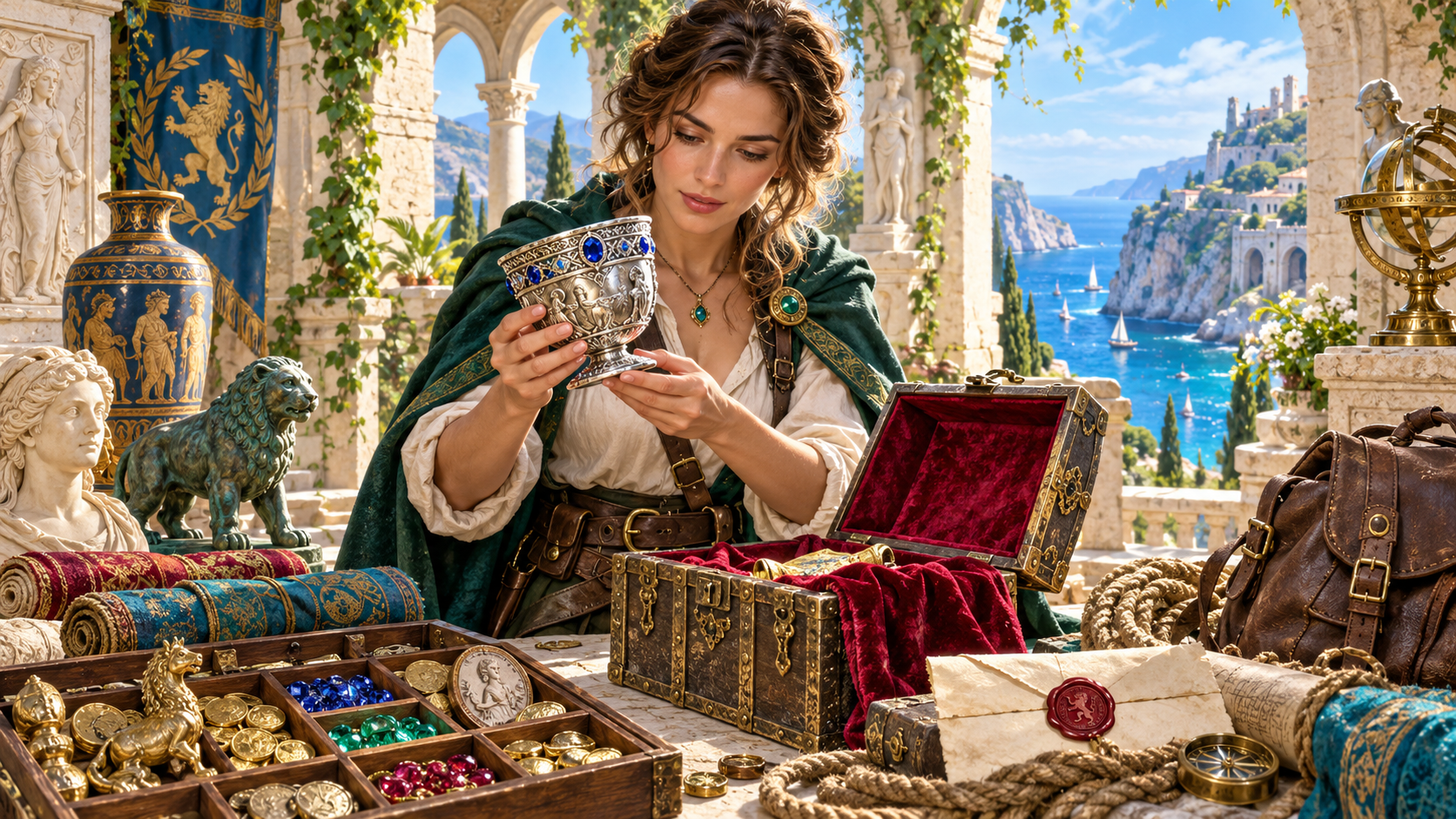
Give the reward a place in the story
Connect the contents to the location and its history.
Start with the party tier, source and scale. Decide whether the treasure is individual loot, group loot, a cache, hoard, vault, tomb or quest reward.
Combine valuables with origin, ownership and condition. Use story notes and adaptable value guidance when preparing what the party finds.
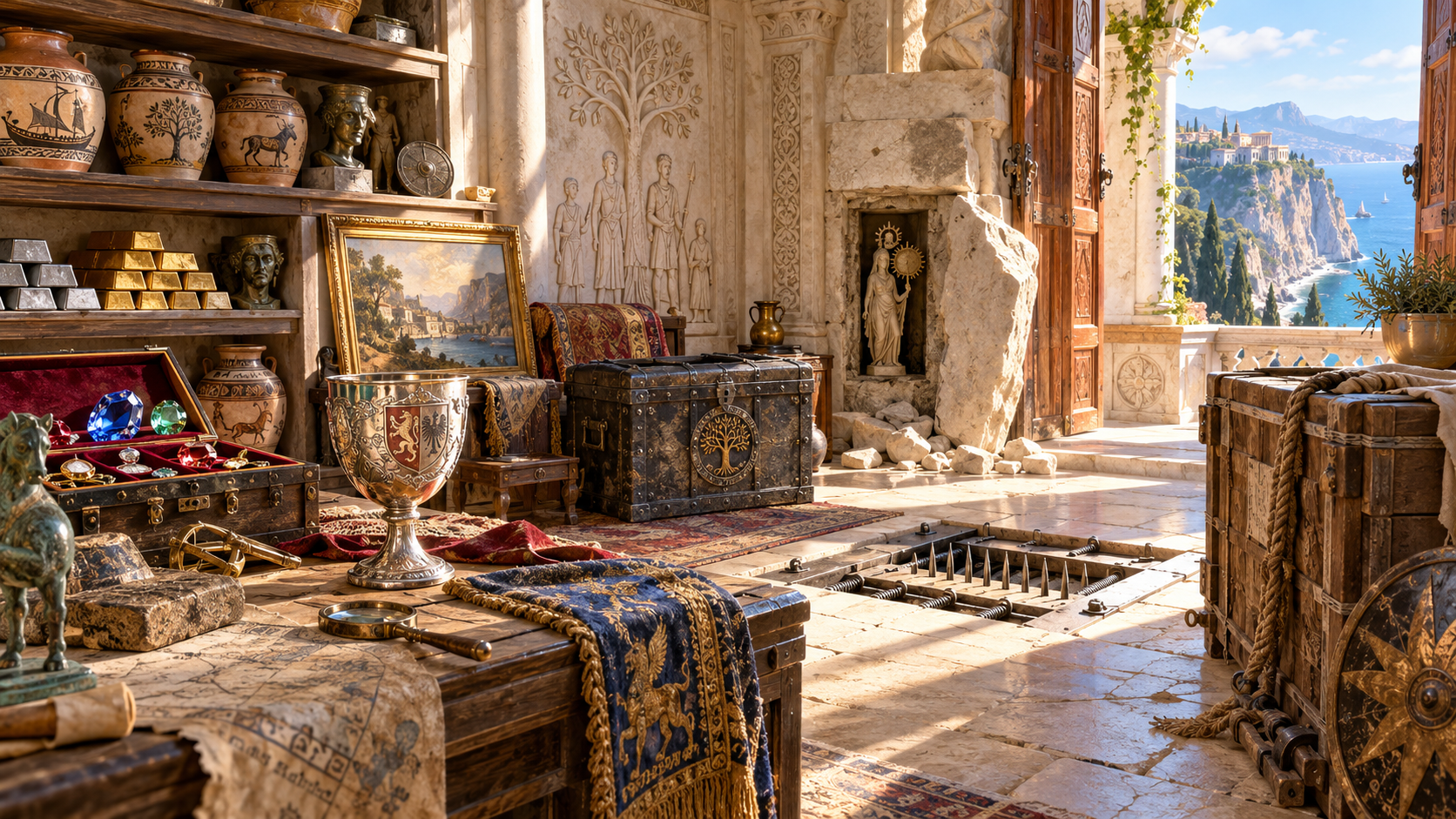
Valuables and the place that holds them
The illustration shows a treasury room with gems, bullion, artwork, decorated vessels and locked chests. A concealed wall recess, exposed floor spikes and a packed chest add discovery and transport details.
Prepare a reward with a source, history and ownership. Consider its condition, concealment and practical consequences when deciding how the party encounters it.
The contents and their context
Keep a reward and its story details together.
Choose individual loot, group loot, a cache, hoard, vault, tomb or quest reward. Give the treasure a reason to be in the adventure.
Set party tier, source, scale and wealth level. Use adaptable value guidance when fitting the package to your game.
Prepare a currency mix alongside gems, jewellery and precious materials. Review the contents and their suggested value together.
Include art, ceremonial objects, textiles and collectables. Choose details that connect the reward to a place or a previous owner.
Prepare trade goods and practical valuables. Include useful objects, documents and keys when they belong in the package.
Include a magical-item reference where suitable. Use a separate item design when you need the rules and details of the item itself.
Add origin, historical value, a previous owner and story significance. Give the collection a clue to its past.
Prepare concealment and discovery context. Decide what the party notices and which details you want to reveal during play.
Consider damage, disputed ownership, recognition and transport problems. Keep practical consequences beside the reward.
Review the full Dungeon Master package beside a separate player version. Choose the details to share and check custom edits before play.
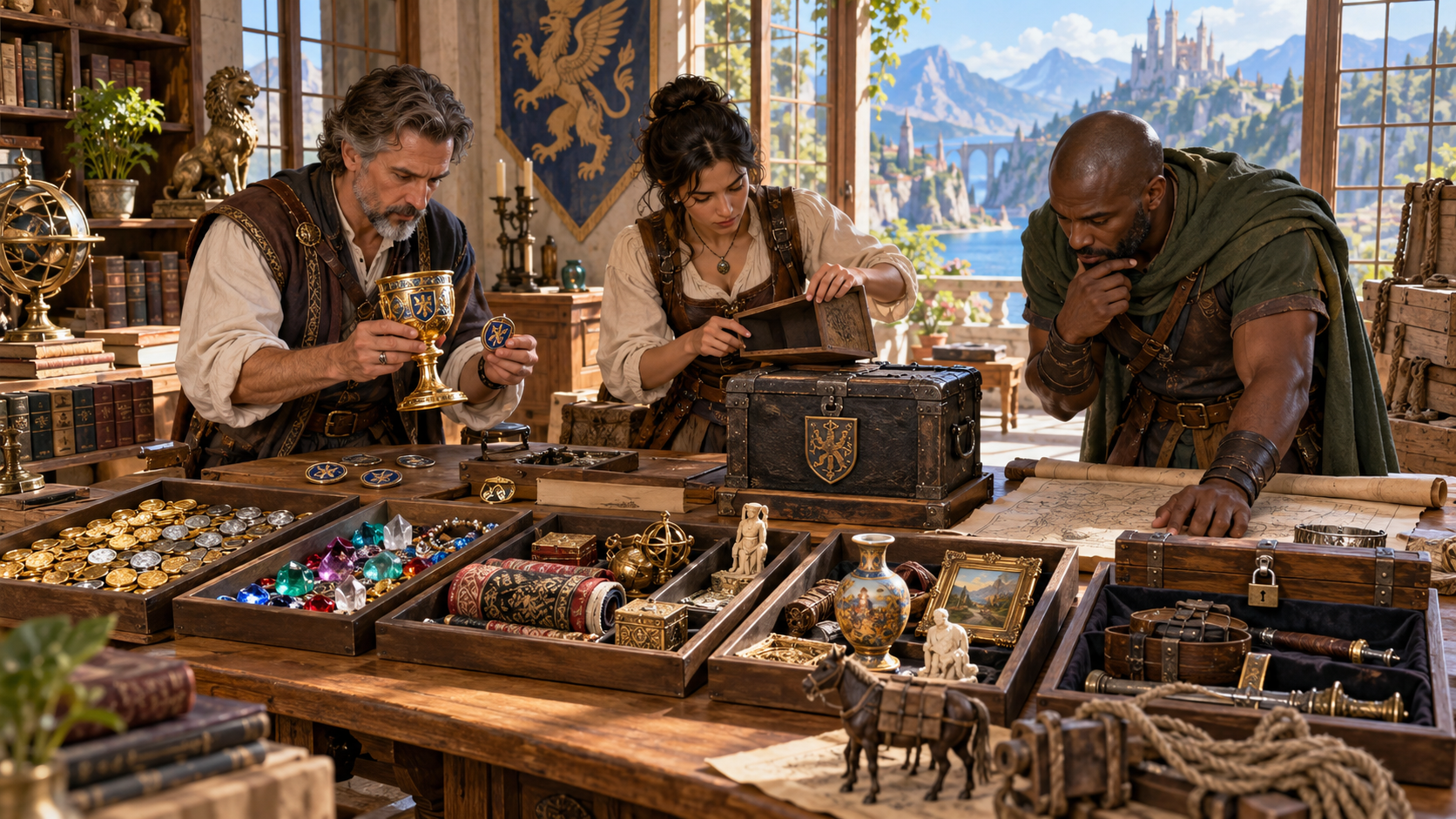
Reviewing and sorting a treasure cache
The illustration shows three planners inspecting a decorated goblet, heraldic tokens, a chest and a map. Sorted coins, gems, textiles, art and practical objects lie in trays beside them.
Choose tier, source and scale, then refine wealth, contents, history and condition. Generate the package, edit the details for your adventure and review the version you want to share.
From reward idea to discovery
A focused workflow for caches, hoards and rewards.
Pick a preset, party tier, source and scale. Decide where the treasure is found and why it belongs there.
Refine wealth, currency, gems, art and practical valuables. Add optional item references, historical value, faction, ownership risk and condition.
Read the value guidance, origin, concealment, claims and transport considerations. Edit the package so it fits your setting and game.
Review the player version alongside the full package. Check ownership, provenance and custom edits, then choose what the players learn.
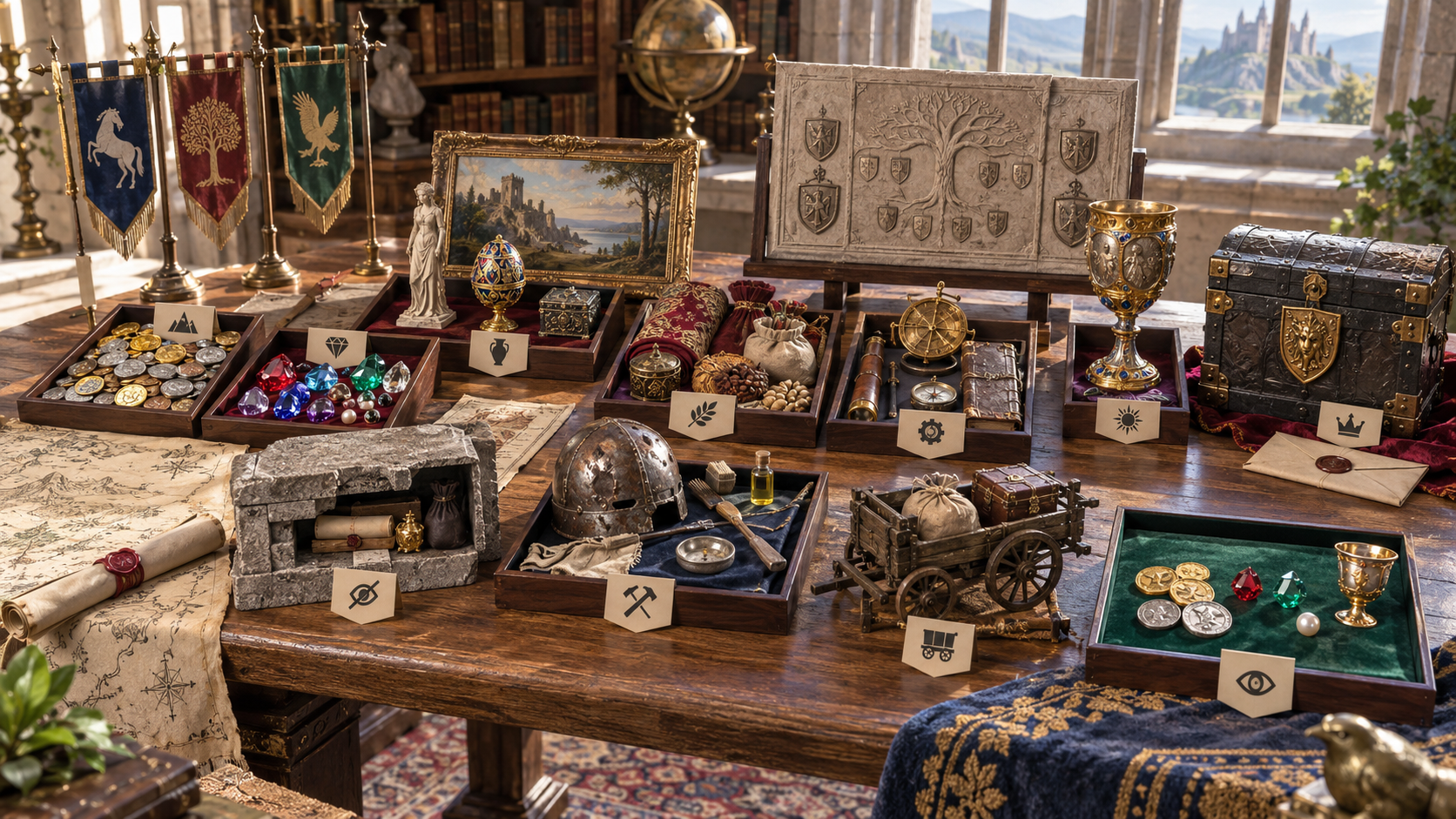
A complete treasure package
The illustration shows labelled trays of currency, gems, artwork, provisions and tools beside heraldic symbols, a hidden cache, damaged equipment and a loaded cart. A separate visible tray holds selected coins, jewels and a goblet.
Keep valuables, history, condition and discovery notes together. Review practical consequences and prepare the selected contents you want to reveal at the table.
Keep your rewards and caches
Return to a treasure package during campaign preparation.
Save a treasure package, search by name and reopen the record. Keep the reward beside your notes for the location or adventure.
Use unclaimed, claimed and distributed record labels and filters. Duplicate a package when you need a separate version for another reward.
Read the full Dungeon Master package beside the player version. Review ownership, provenance and any custom edits before copying details for players.
Copy a selected view, download the complete result as JSON or print the current view. Keep the full package available in your session preparation.
Your workspace and related tools
Open your tools through your VISINVOKE account.

Open Treasure Generator in DCC. Get the desktop workspace through your account installer page.
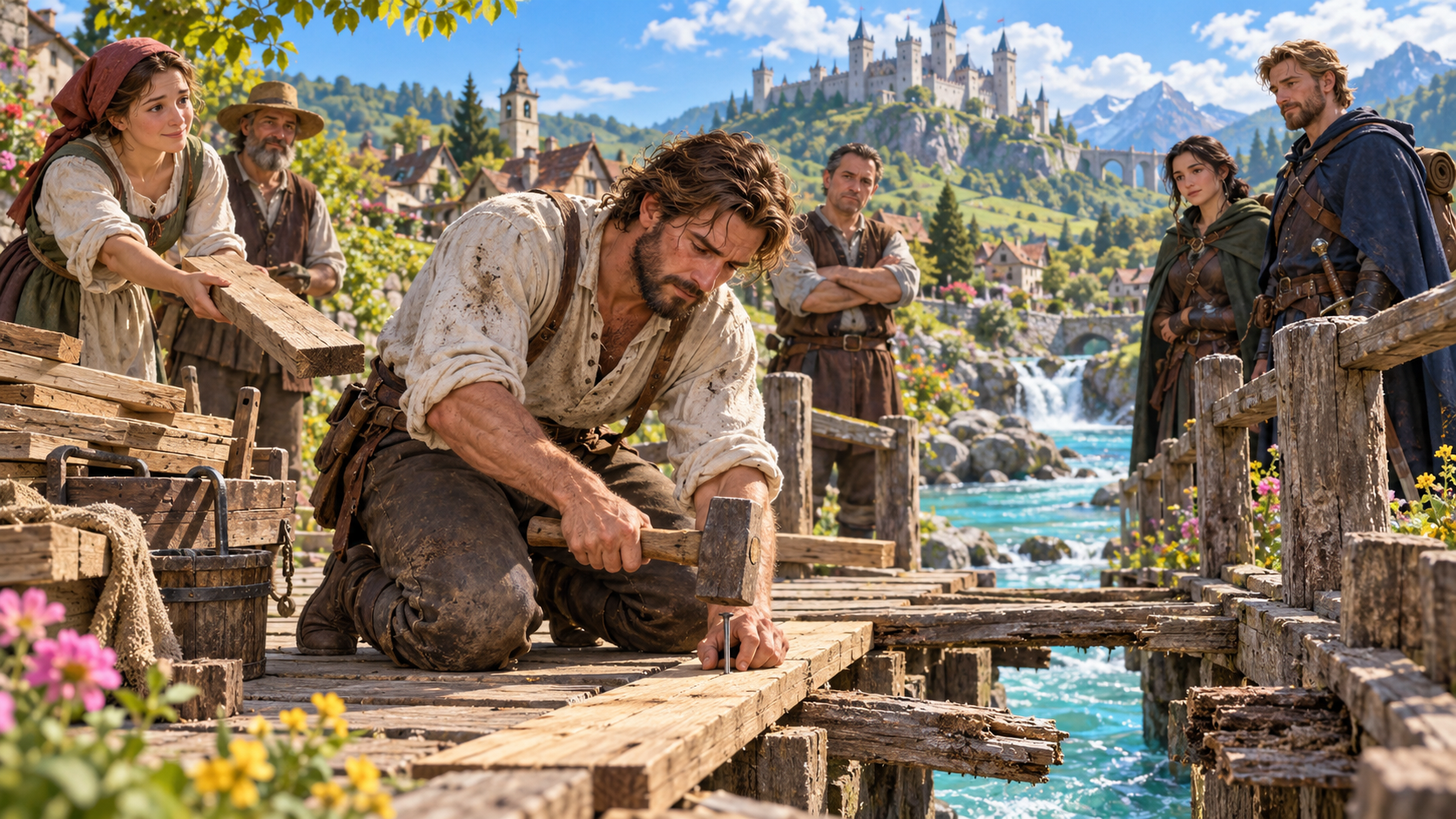
Prepare a separate story about making amends, its cost and how others respond. Use that material alongside your adventure.
Product illustrations show treasure appraisal, discovery context, cache preparation and a complete reward package.
Questions and answers
Rewards, value guidance, history, player views, exports and account access.
It creates a reward, cache, hoard, vault, tomb or quest-reward package with valuables, adaptable value guidance, origin, ownership, concealment, condition and story notes.
Choose a preset, party tier, source and scale. Generate the package and review the valuables, value guidance and story details for your adventure.
Refine wealth, currency mix, gems or art preference, mundane valuables, optional magical-item references, historical value, concealment, ownership risk, faction and condition.
Adapt the suggested value units to your game and review the package as a whole. A magical-item entry is a reference; prepare the actual item design separately when you need its rules.
Copy the full Dungeon Master package or a separate player version, print the current view or download the complete result as JSON. Review ownership, provenance and custom edits before sharing.
Open Treasure Generator from the Generators collection in VISINVOKE Desktop Control Centre. Create an account or sign in and get DCC through your account installer page.
Continue in VISINVOKE
Create an account or sign in. Get Desktop Control Centre through your account installer page and open Treasure Generator.
Keep reward packages and discovery notes beside your campaign preparation.